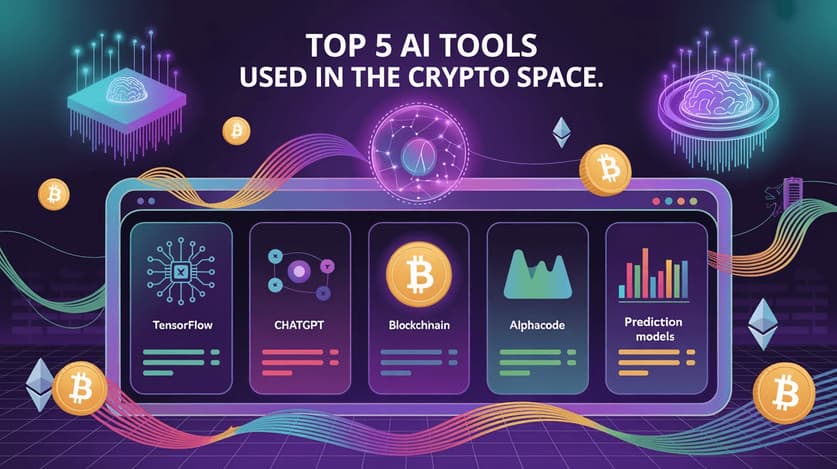
Web3 is a new internet paradigm based on decentralization, blockchain, and user ownership of data. Despite its enormous potential, the Web3 ecosystem faces significant challenges including scalability, energy efficiency, and governance. Artificial Intelligence (AI) is emerging as a key tool that can address these challenges and ensure the sustainable development of Web3.
Optimizing scalability and performance
One of the main barriers to the widespread adoption of Web3 is the problem of blockchain scalability. Current networks often face limitations in transaction processing speed and high cost of gas, which reduces usability.
AI can help optimize blockchain networks by predicting load and allocating resources more efficiently. Machine learning algorithms can improve consensus mechanisms, reducing latency and increasing throughput. In addition, AI can create intelligent protocols that adapt to current network conditions, increasing network resilience.
Reducing energy consumption
Many blockchains, especially those using Proof of Work (PoW), consume huge amounts of energy. This becomes an obstacle to sustainability and has been criticized by the environmental community.
AI plays an important role in the design and implementation of energy-efficient solutions. AI can be used to predict and optimize energy usage at network nodes, identify excessive costs, and suggest alternative consensus algorithms, such as Proof of Stake (PoS), with automatic transition and control. AI also helps create smart contracts that minimize unnecessary computational operations.
Enhanced security and fraud prevention
Web3 is characterized by openness and decentralization, which makes it attractive to various attackers. Phishing attacks, smart contract hacks, and market manipulation are just some of the threats.
AI is capable of detecting anomalies in transactions and user behavior in real time. Machine learning identifies suspicious patterns and helps respond quickly to potential attacks. This significantly increases the security and trust in the ecosystem.
Automating governance and decentralized organizations (DAOs)
Decentralized Autonomous Organizations (DAOs) are an important element of Web3, but their management is often difficult due to the complexity of coordinating participants.
AI can automate decision-making in DAOs by analyzing community opinion, predicting consequences, and suggesting optimal strategies. This makes governance more efficient, transparent and adaptive, which is critical for long-term development.
Personalization and improved user experience
For mass adoption of Web3, technology needs to be made more accessible and user-friendly. AI enables the creation of personalized interfaces tailored to user preferences and behavior.
AI-based recommendation systems help users navigate complex decentralized applications (dApps), simplify interactions with cryptocurrencies and tokens. This lowers the threshold of entry and contributes to the growth of the ecosystem.
Conclusion
The integration of artificial intelligence into the Web3 ecosystem opens up new opportunities for sustainable development. Optimizing performance, reducing energy consumption, enhancing security, automating control and personalization are all aspects made achievable through AI.
Web3 and AI are two complementary trends that together can shape a more open, efficient and sustainable internet of the future. This is why artificial intelligence is key to the sustainable development of Web3.